Does Rice Protein Haircare Improve Thickness and Reduce Breakage?
Can hydrolyzed rice protein actually make hair thicker and stronger? This guide explores how rice protein works, why molecular size matters, and the science behind its ability to reduce breakage, improve elasticity, and create the appearance of fuller, healthier hair.

What hydrolyzed rice protein actually does to your hair structure, why the form it comes in matters, and how to use it without overdoing it.
- Hydrolyzed rice protein can reduce breakage and improve the appearance of thickness, but only when the protein molecules are small enough to penetrate the hair shaft.
- It works by bonding to damaged areas inside the cortex, rebuilding tensile strength, improving elasticity, and smoothing the cuticle.
- The visual volume effect comes from each strand swelling slightly as it binds more moisture, not from new hair growth.
- Protein overload is a real risk with raw rice water products, but far less common with properly hydrolyzed formulas.
- Remilia's Green Coco Hair Mask and Rice & Shine Leave-In Conditioner use hydrolyzed rice protein at different intensities for weekly repair and daily protection.
Yes. Hydrolyzed rice protein can help reduce breakage and make hair look thicker and fuller, but the details matter. The protein has to be hydrolyzed (broken into small enough pieces to bind to the hair), and the formula it sits in has to balance that protein with moisture. When those two things line up, rice protein reinforces weak spots along the strand, smooths the cuticle, and adds the appearance of volume without weighing hair down. This article explains how that works, what the research shows, and how to use rice-protein products without running into the common pitfall of protein overload.

What Rice Protein Actually Does to Hair
Hair is mostly keratin, a protein. Bleaching, coloring, heat styling, and everyday friction chip away at that structure, leaving gaps and rough patches along the cuticle. Hydrolyzed rice protein works by filling some of those gaps.
The word hydrolyzed is the important part. Raw and fermented rice water contains large proteins, often in the range of 13,000 to 30,000 Daltons, which are too big to get past the hair cuticle. Hydrolysis breaks those proteins into much smaller peptides, often below 1,000 Daltons, small enough to slip into the cortex and bond to damaged areas. Hydrolyzed plant proteins deposit preferentially on the damaged parts of the hair fiber, which is exactly where reinforcement is needed.
The mechanism is adsorption. Positively charged peptides from the hydrolyzed protein bind to negatively charged sites on damaged strands. The measurable results reported in testing of hydrolyzed proteins include improved tensile strength, reduced breakage under combing stress, and better elasticity on stretch-and-release tests.
Thickness: Real Strengthening Versus Visual Volume
When people say rice protein makes hair thicker, they usually mean two different things at once.
The first is structural. By bonding inside the cortex and filling cuticle gaps, the protein reinforces individual strands so they resist snapping. Stronger strands mean less breakage, and less breakage over time means you keep more of the length and density you already have.
The second is visual. Rice protein increases the hair's ability to bind moisture, which causes each strand to swell slightly. That small increase in diameter, combined with a smoother cuticle that reflects more light and reduces flyaways, makes hair look fuller and bouncier. One cosmetic-grade supplier reports that hydrolyzed rice protein has been shown to increase total hair volume by up to 32 percent in testing. It is worth being precise here: this is added body and the appearance of fullness, not new follicles or new hair growth.

Why Breakage Goes Down
Breakage happens when a strand is stretched or stressed beyond what its weakened structure can handle. There are a few ways rice protein reduces that risk:
It rebuilds weak points. The small peptides bond with the internal keratin and patch areas thinned out by chemical or heat damage.
It improves elasticity. Healthy hair stretches and returns to shape without snapping. Reinforced strands flex under the stress of brushing, tying, and styling instead of breaking.
It reduces friction. A smoother cuticle means strands glide past each other rather than catching and tearing, which matters most during wet detangling, the point at which hair is most fragile.
A Note on Protein Overload
Protein is not a case of more is always better. Too much protein, especially from products that sit on the surface rather than absorbing, can leave hair stiff and brittle. The risk is largely form-specific. High-molecular-weight proteins from raw rice water accumulate on the surface, while properly hydrolyzed peptides absorb and are far less likely to cause buildup. The practical takeaway is to pair protein treatments with hydrating products and to space out intensive treatments rather than using them every day.
How Remilia Uses Rice Protein
Two Remilia Hair products are built around rice protein, and they play different roles in a routine.
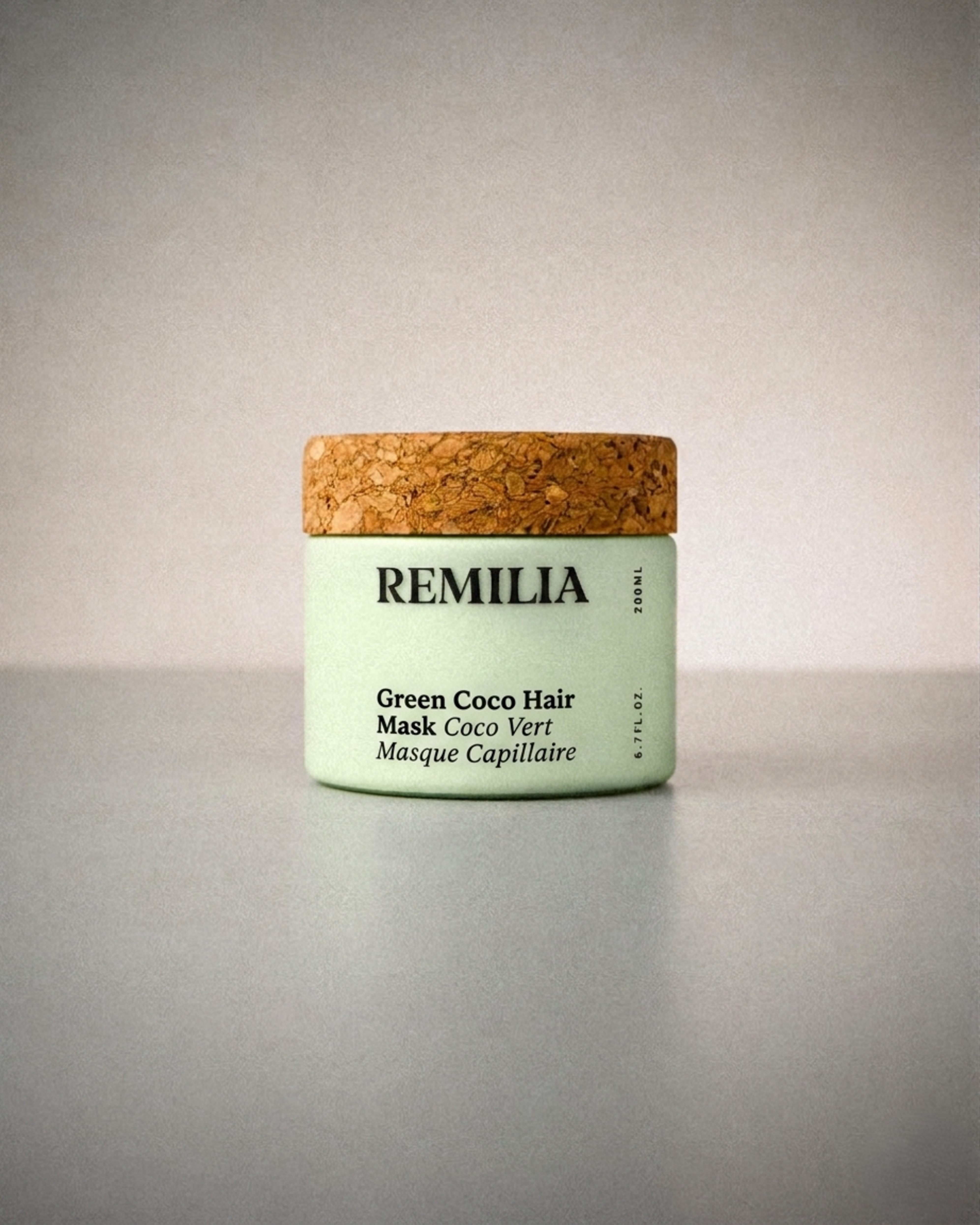
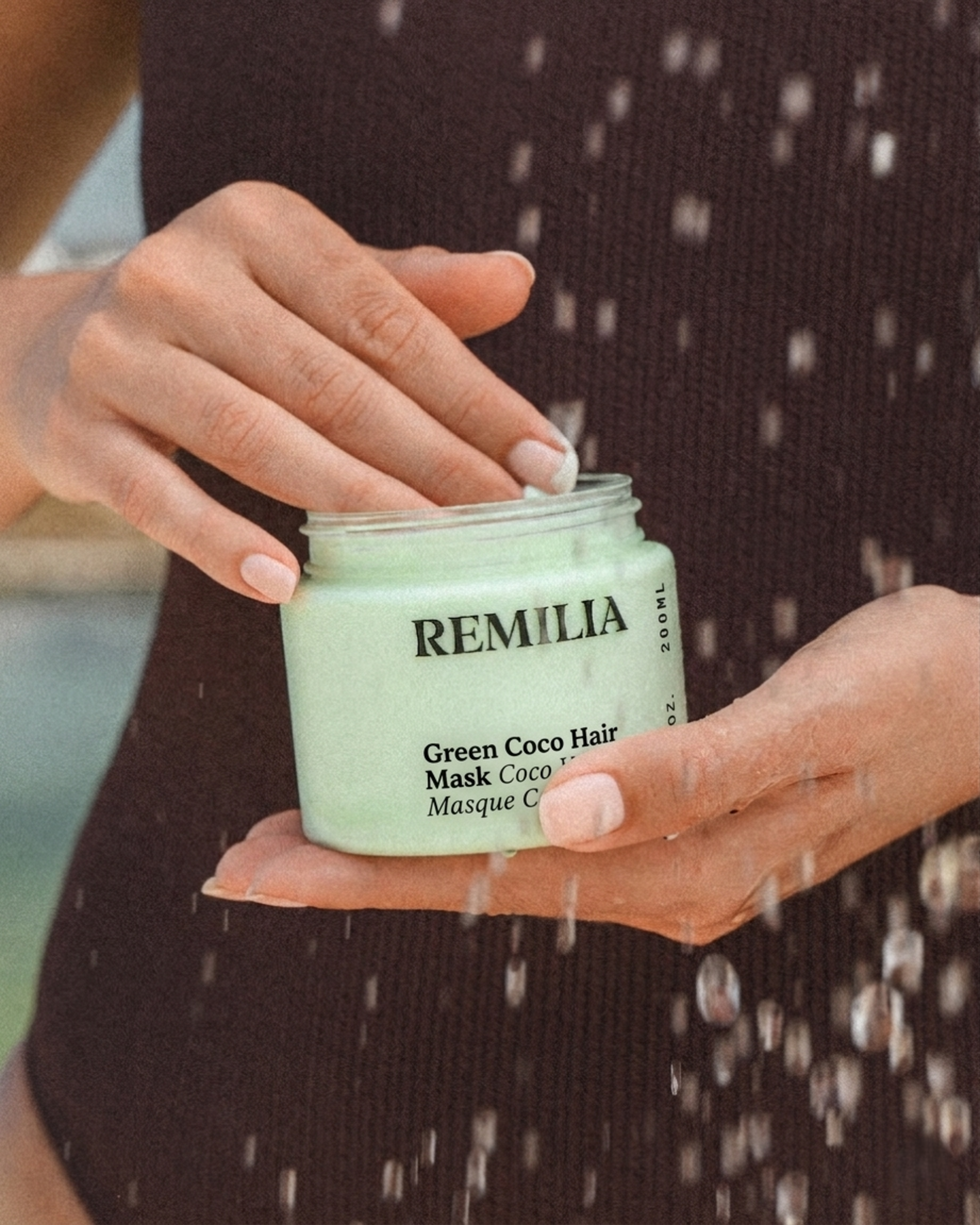
The Green Coco Hair Mask is a rinse-out deep treatment that contains 1 percent hydrolyzed rice protein (listed as RICE TEIN NPNF) alongside coconut oil, avocado oil, and a PRODEW amino acid complex. Remilia cites clinical testing on the formula showing up to 50 percent stronger hair after one treatment, and a separate study on its hydrolyzed rice protein showing a 44.1 percent improvement in hair volume after five washes. These are company-reported figures, so treat them as claims rather than independent results, but they are consistent with what hydrolyzed rice protein is known to do.
The Rice & Shine Leave-In Conditioner is a leave-on spray that combines hydrolyzed rice protein with hydrolyzed quinoa and barley, plus panthenol (Vitamin B5). It is positioned mainly around heat protection up to 450°F / 232°C and color retention, with the protein blend doing the strengthening and detangling work. Because it is not rinsed out, it offers ongoing reinforcement and friction reduction through the day.
Used together, the mask handles periodic deep repair and the leave-in handles daily protection. That split also helps manage protein balance: the heavy treatment is occasional, the lightweight one is daily.

Product Comparison
| Feature | Green Coco Hair Mask | Rice & Shine Leave-In Conditioner |
| Type | Rinse-out deep conditioning mask | Leave-in milky spray |
| Rice protein form | 1% Hydrolyzed Rice Protein (RICE TEIN NPNF) | Hydrolyzed Rice Protein |
| Other key proteins | Hydrolyzed Quinoa, PRODEW Amino Acid Complex | Hydrolyzed Quinoa, Hydrolyzed Barley |
| Primary role | Strength and volume repair | Heat protection and daily detangling |
| Headline brand claims | Up to 50% stronger hair after 1 use; +44.1% volume after 5 washes | Heat protection up to 450°F; up to 3x better color retention |
| Heat protection | Not a heat protectant | Up to 450°F / 232°C |
| Recommended frequency | 1–2 times per week | Daily, as needed |
| Color-safe / vegan | Yes / Yes | Yes / Yes |
How to Build a Rice-Protein Routine
For most people, a simple structure works. Use the Green Coco Hair Mask once or twice a week on clean, damp hair, leaving it on for 5 to 10 minutes (longer under a warm towel for more intensive repair). On other days, or before any heat styling, spray the Rice & Shine Leave-In through damp mid-lengths and ends, comb through, and style as usual. This keeps the protein doing its job consistently while avoiding the stiffness that comes from overdoing it.
If you are looking to add another step to your routine, consider pairing the mask and leave-in: Shop Now
FREQUENTLY ASKED QUESTIONS
DOES THE GREEN COCO HAIR MASK ACTUALLY MAKE HAIR THICKER? +
Remilia reports clinical testing showing up to 50 percent stronger hair after one treatment and a 44.1 percent improvement in volume after five washes from its hydrolyzed rice protein. In practical terms, the mask adds body and fullness and reduces breakage so you keep more of your existing hair. It does not grow new hair. These are company-provided figures, so view them as brand claims that align with the known behavior of hydrolyzed rice protein.
HOW IS THE RICE PROTEIN IN RICE & SHINE DIFFERENT FROM THE MASK? +
Both use hydrolyzed rice protein, but the delivery differs. The Green Coco Hair Mask is a rinse-out treatment at 1 percent rice protein, designed for periodic deep repair. The Rice & Shine Leave-In is a lightweight spray you leave in, built around daily heat protection up to 450°F and detangling, with the protein blend reinforcing strands throughout the day.
CAN I USE BOTH PRODUCTS TOGETHER WITHOUT CAUSING PROTEIN OVERLOAD? +
Yes, when you stagger them. Use the mask only 1 to 2 times per week for intensive repair, and use the leave-in daily for lightweight protection. Properly hydrolyzed peptides absorb into the hair rather than sitting on the surface, which lowers buildup risk, but spacing the heavy treatment out is still the safest approach.
WILL RICE & SHINE WEIGH DOWN FINE HAIR? +
It is formulated as a lightweight, milky spray meant to mist evenly without heaviness. Hydrolyzed rice protein is known for adding volume without weight. For fine hair, apply a small amount focused on mid-lengths and ends rather than the roots, and add more only if needed.
IS RICE PROTEIN SAFE FOR COLOR-TREATED HAIR? +
Yes. Both the Green Coco Hair Mask and Rice & Shine Leave-In are color-safe. Rice & Shine is specifically positioned for color retention, with Remilia citing up to 3x better color retention after repeated washes thanks to its quinoa and barley protein blend.
HOW OFTEN SHOULD I USE THE GREEN COCO HAIR MASK FOR BREAKAGE? +
Remilia recommends 1 to 2 times per week, or as needed based on hair condition. For hair that is bleached, heat-damaged, or over-processed, the upper end of that range plus the warm-towel method for 20 to 30 minutes gives the protein more contact time to reinforce weak strands.
DOES THE LEAVE-IN REPLACE A HEAT PROTECTANT? +
For Rice & Shine, the heat protection is built in. It is designed to shield hair up to 450°F / 232°C, so applying it to damp hair before blow-drying or hot tools serves as your heat protection step. The Green Coco Hair Mask is not a heat protectant and should not be relied on for that purpose.