Why Does My Hair Feel Stiff or Brittle After a Protein Treatment?
What protein overload actually is, why it happens even with a treatment that worked before, and how to formulate around it instead of avoiding protein entirely.

Stiff, brittle hair after a protein treatment almost always means the treatment added more protein than the hair could balance with moisture. Protein fills structural gaps in the hair shaft, but without enough moisture alongside it, the shaft becomes rigid instead of flexible. This is called protein overload, and it's a dosing problem, not proof that protein itself is bad for that hair type.
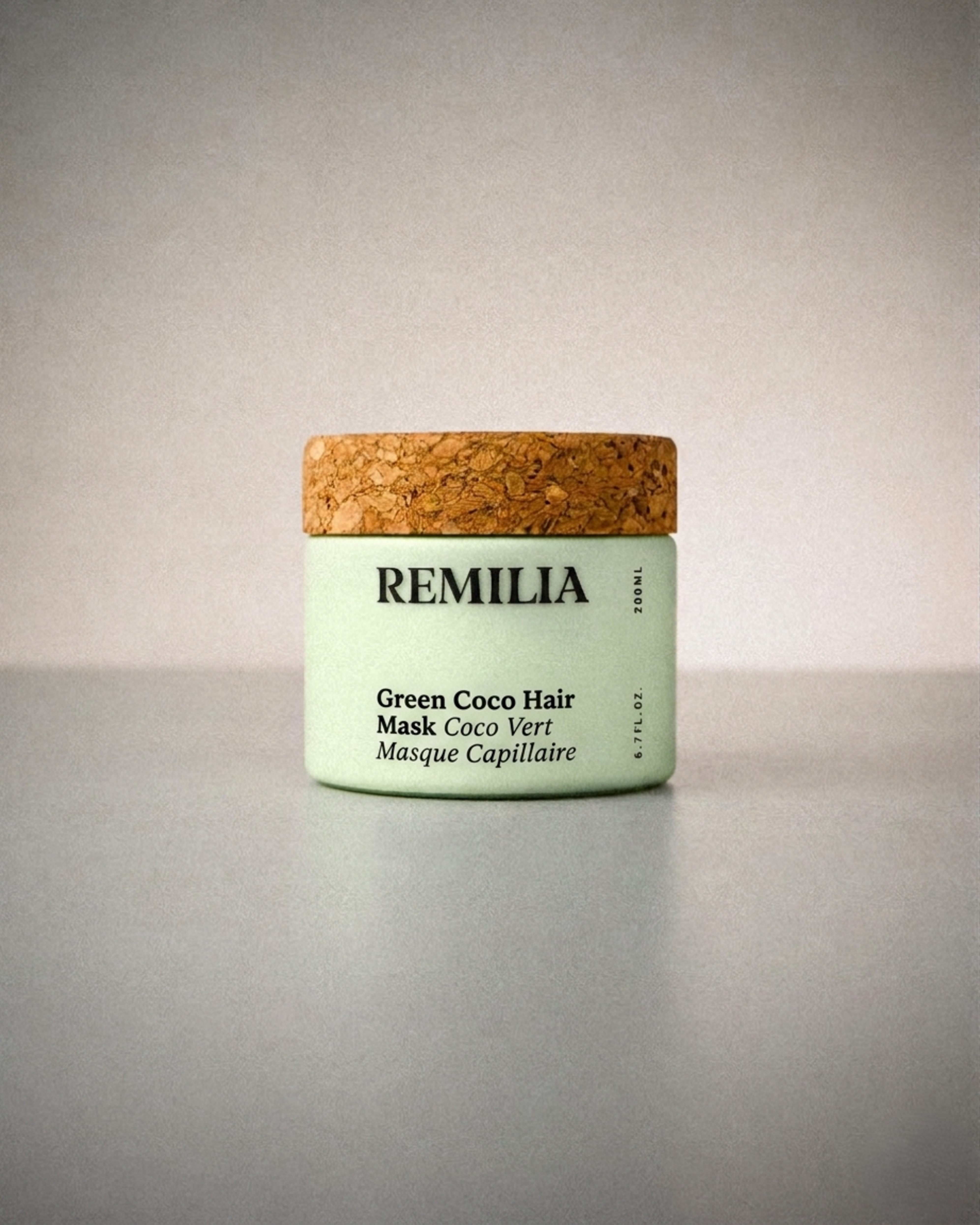
Low-porosity and fine hair are more prone to it because they absorb protein quickly but hold onto it longer. Formulas built at a lower protein percentage with oils layered in, like the Green Coco Hair Mask, are designed specifically to reduce this risk.
Yes, this is protein overload, and it's more common than most people expect. The key nuance is that it isn't a sign to swear off protein treatments altogether. Hair genuinely needs protein to stay strong, especially after color, heat styling, or chemical processing. The fix is adjusting how much protein goes on, how often, and whether enough moisture is layered in alongside it, not eliminating protein from the routine.
What Protein Overload Actually Is
Hair is mostly keratin, a structural protein. When hair is damaged, gaps open up in that structure, and protein treatments work by temporarily filling them. The problem starts when more protein gets added than the hair can hold in balance with moisture.
Instead of restoring flexibility, the excess protein makes the shaft rigid, so hair loses its natural give and starts to feel stiff, straw-like, and prone to snapping rather than bending. This is different from ordinary breakage caused by heat or mechanical damage. Overload-related brittleness usually shows up within a day or two of a protein treatment and affects hair broadly rather than just the ends, which is one way to tell the two apart.

Why It Happens Even When the Treatment Worked Before
Several things push hair past the point of balance. Using protein treatments too frequently is the most common cause, since hair doesn't fully process one dose before the next arrives. Layering multiple protein products in the same routine, such as a protein mask, a protein-based leave-in, and a protein-heavy styling product, adds up faster than any single label suggests.
Many everyday products also contain hidden proteins like hydrolyzed keratin, wheat, or silk that aren't obvious from marketing copy alone. Low-porosity hair is especially vulnerable, since its tightly closed cuticle resists moisture but still lets protein bind to the surface, tipping the balance faster than in high-porosity hair.
Oils vs. Masks: Which One Actually Restores Your Hair Barrier? gets into why the oil layer matters as much as the protein dose itself. See how oils and masks play different roles in barrier repair.
Fixing It Without Giving Up Protein
The first step is pausing protein treatments entirely for one to two weeks and focusing on moisture-only products to rebalance the shaft. Hair usually softens again within a wash or two once the excess protein is diluted out. After that, reintroduce protein at a lower frequency and, ideally, in a formula that's built lighter to begin with rather than the same product that caused the problem.
This is where formula percentage matters more than most people realize. Remilia Hair's Green Coco Hair Mask is formulated at 1 percent Hydrolyzed Rice Protein specifically because rice protein's small molecular size makes it effective at low concentrations, unlike older, heavier protein sources that require a higher percentage to work. The mask pairs that protein with coconut, avocado, and castor oil so moisture is delivered in the same treatment rather than left to a separate step.
Curious what's actually happening at the strand level when breakage continues despite treatment? Understanding Hair Breakage: A Professional Guide to Repair walks through the underlying causes.
Choosing a Lighter Protein Routine
Once hair has recovered, the goal is preventing overload from recurring rather than avoiding protein indefinitely. That means choosing formulas built for frequency, not just concentrated one-off treatments.
| Green Coco Hair Mask | Rice & Shine Leave-In Conditioner | |
| Protein concentration | 1% Hydrolyzed Rice Protein plus Hydrolyzed Quinoa | Hydrolyzed Rice Protein, Hydrolyzed Quinoa, Hydrolyzed Barley (lightweight spray) |
| Format | Rinse-out mask | No-rinse leave-in spray |
| Recommended frequency | 1–2 times per week | Daily |
| Moisture pairing | Coconut Oil, Avocado Oil, Castor Oil | Coconut Oil, Olive Oil, Camellia Seed Oil |
| Why it matters | Concentrated enough to rebuild structure without exceeding what hair can absorb in one sitting | Light enough for daily use without stacking protein on protein |

Clinical testing showed up to 50 percent stronger hair after a single Green Coco Hair Mask treatment; treat this as a company-reported figure rather than an independent study result. The relevant point for overload-prone hair is the formulation logic: a lower protein percentage, applied on a set schedule, paired with oils that keep the shaft flexible.
Practical Takeaways
If hair feels stiff or brittle after a protein treatment, stop protein products for one to two weeks and use moisture-only conditioners instead. When reintroducing protein, use a lower-percentage formula like Green Coco Hair Mask at once or twice a week rather than daily, and reserve lighter leave-in formulas for maintenance in between. Check ingredient labels on shampoos and stylers for hidden proteins that might be adding up without being noticed.
Final Thoughts
Protein isn't the problem. Too much protein without enough moisture is.
If your hair feels stiff or brittle after a treatment, the answer isn't necessarily to remove protein from your routine. It's about finding the right concentration, frequency, and balance for your hair's current needs.
A lighter protein routine can help maintain strength without sacrificing flexibility, especially when protein is paired with the moisture and oils your hair needs to stay soft and manageable.
For targeted protein and moisture support, explore the Green Coco Hair Mask and Rice & Shine Leave-In Conditioner.

FREQUENTLY ASKED QUESTIONS
HOW DO I KNOW IF IT'S PROTEIN OVERLOAD OR JUST REGULAR DAMAGE? +
Protein overload typically shows up within a day or two of a treatment and affects hair broadly, not just the ends, with a stiff, straw-like feel and reduced shine. Regular damage from heat or friction tends to concentrate more at the ends and builds up gradually rather than appearing right after a single treatment.
HOW LONG DOES IT TAKE FOR HAIR TO RECOVER FROM PROTEIN OVERLOAD? +
Most hair softens within one to two washes once protein treatments are paused and moisture-only products are used instead. Full recovery, including restored elasticity, can take two to three weeks depending on how much excess protein built up.
WILL GREEN COCO HAIR MASK CAUSE PROTEIN OVERLOAD IF I USE IT WEEKLY? +
It's formulated at 1 percent Hydrolyzed Rice Protein specifically to be used one to two times a week without causing overload for most hair types. Hair that is especially low-porosity or fine may still want to start at once a week and watch how it responds.
IS RICE & SHINE LEAVE-IN CONDITIONER SAFE TO USE IF I ALREADY USED A PROTEIN MASK THAT DAY? +
It can be, since it's a lightweight formula designed for daily use rather than a concentrated treatment. Hair that's currently showing signs of overload should skip additional protein products, including the leave-in, until it's rebalanced with moisture-only products.
DOES LOW POROSITY HAIR NEED TO AVOID PROTEIN TREATMENTS COMPLETELY? +
No, but low-porosity hair should use protein less frequently and in lighter formulas, since it absorbs protein quickly but takes longer to release it. A once-a-week schedule with a lower-percentage formula like Green Coco Hair Mask is a reasonable starting point.
WHAT SHOULD I USE INSTEAD OF PROTEIN WHILE MY HAIR RECOVERS FROM OVERLOAD? +
Moisture-focused conditioners and leave-ins without added protein are the priority during recovery. Once hair feels flexible and bouncy again rather than stiff, protein can be reintroduced gradually at a lower frequency.