How Do I Know If My Hair Needs Protein or Moisture?
A guide to reading the signs your hair sends you, and matching the fix to what it's actually asking for.

Hair that snaps, feels gummy when wet, or won't hold a curl is usually asking for protein. Hair that feels rough, tangles constantly, or looks frizzy and dull is usually asking for moisture. Most damaged hair needs both, just not in equal amounts at once.
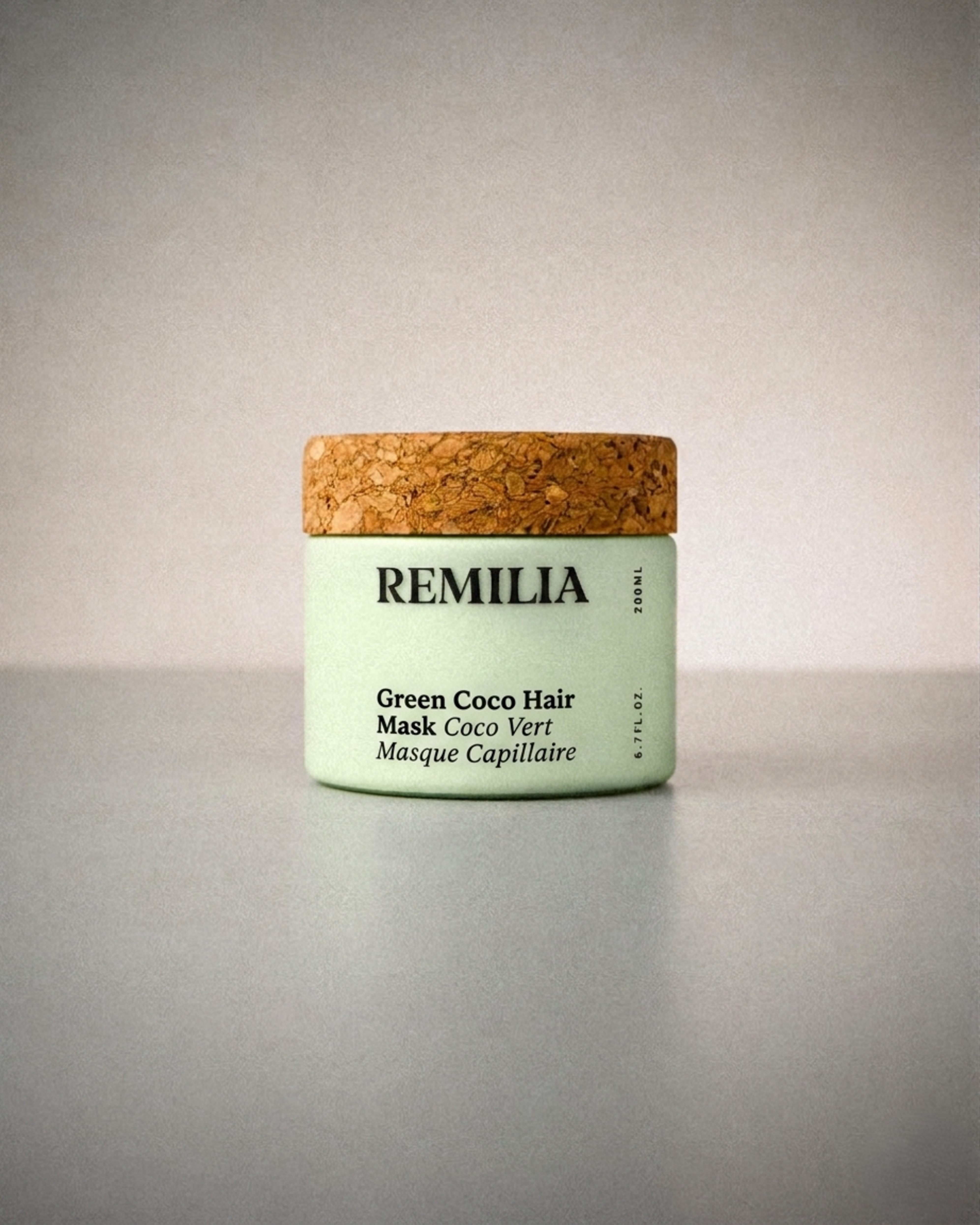
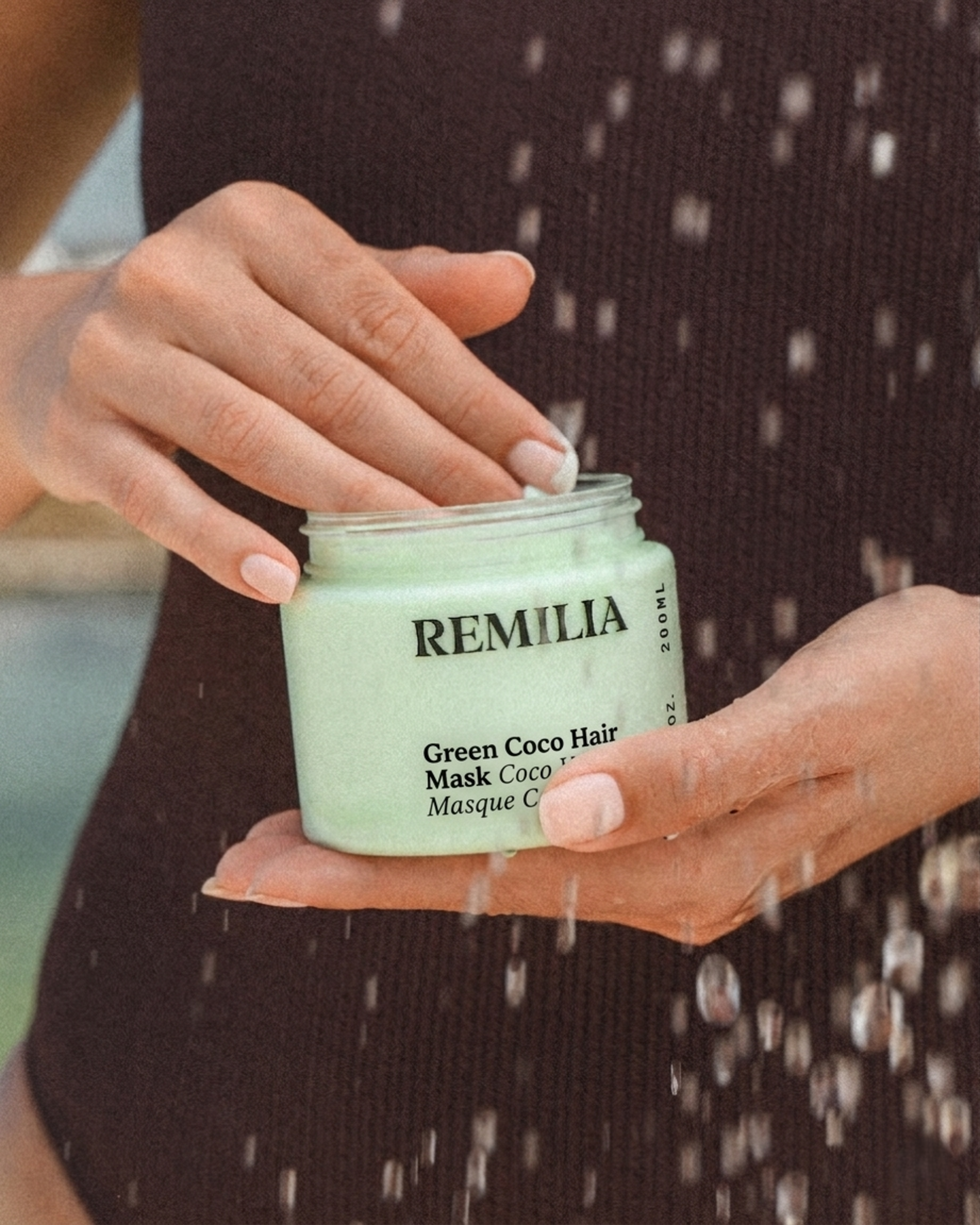
Rice protein is popular in current formulas because its small molecular size fills gaps in the hair shaft without the heavy buildup older protein treatments caused. Remilia Hair's Green Coco Hair Mask is built around that idea: a treatment that layers protein and moisture together instead of forcing a choice between the two.
Yes, there is a reliable way to tell which one your hair needs: it comes down to how the hair behaves when wet. A strand that stretches noticeably and feels almost gummy before it breaks is signaling a protein gap. A strand that feels stiff and snaps with almost no stretch is signaling a moisture gap. Most people don't fit into one category. Hair chemistry shifts with the seasons, color treatments, and heat tool use, so the diagnosis is worth repeating every few months.
How Does Protein Differ from Moisture?
Hair strands are built mostly of keratin, a fibrous protein arranged in a tight, overlapping structure. Damage from bleach, heat, or friction creates gaps in that structure. Protein treatments work by temporarily filling those gaps, which is why they restore strength and reduce breakage.
Moisture treatments hydrate the strand and smooth the outer cuticle layer, which is why they reduce frizz and improve softness. Protein rebuilds structure. Moisture restores flexibility.
Fine or low-porosity hair typically needs protein less often, since it already resists absorbing too much. Coarse, high-porosity, or chemically treated hair loses structural protein faster and needs it replenished more frequently, alongside consistent moisture to keep that rebuilt structure flexible.

How to Tell the Difference
The most direct test is the wet strand stretch test. Take a single clean, wet strand and gently pull it between two fingers. Hair that stretches noticeably and feels spongy before snapping is signaling a protein deficiency. Hair that barely stretches and breaks almost immediately, with a rough or straw-like feel even when wet, is signaling a moisture deficiency.
Everyday behavior backs this up. Hair that sheds more than usual, loses its bounce, or feels mushy after washing tends to need protein. Hair that tangles easily, looks dull, or frizzes heavily in humidity tends to need moisture. Split ends paired with a total lack of elasticity usually point toward protein as the more urgent gap.
The Hair Barrier: What It Is and Why It's the Foundation of Healthy Hair explains how this cuticle layer determines whether moisture stays locked in or evaporates out, which is worth understanding before choosing a treatment schedule. Learn what actually damages the hair barrier and how to repair it.
Why Getting It Wrong Backfires
Using protein when hair needs moisture, or using it too often regardless of need, can cause protein overload. The hair shaft absorbs more protein than it can balance with moisture, and the result is hair that feels stiff, brittle, and straw-like, with less shine and bounce than before treatment. This is a common complaint after a protein mask, and it's usually a dosing problem rather than a sign protein is wrong for that hair type.
The opposite mistake, moisture overload, happens less often but shows up as limp, mushy hair that won't hold style. It's more common in low-porosity hair that already resists protein and gets over-conditioned instead.
Curious how rice protein specifically behaves compared to older, heavier protein sources like keratin? Does rice protein improve thickness and reduce breakage? breaks down why molecular size changes the outcome.
Matching the Fix to the Diagnosis
Once the diagnosis is clear, choose a product weighted toward what the hair actually needs, rather than reaching for whatever is already in the routine. Remilia Hair builds its rice-protein formulas at different intensities for exactly this reason.
| Green Coco Hair Mask | Rice & Shine Leave-In Conditioner | |
| Best for | Hair testing as protein-deficient, dry, or damaged | Hair needing light, ongoing protein and heat protection |
| Format | Rinse-out mask, 5–10 minute treatment | Leave-in spray, no rinse |
| Protein level | 1% Hydrolyzed Rice Protein plus Hydrolyzed Quinoa | Hydrolyzed Rice Protein, Hydrolyzed Quinoa, Hydrolyzed Barley |
| Moisture support | Coconut Oil, Avocado Oil, Castor Oil | Coconut Oil, Olive Oil, Camellia Seed Oil |
| Recommended frequency | 1–2 times per week | Daily |
| Why it matters | Delivers a concentrated protein-plus-moisture dose for a clear deficiency | Maintains structure between mask treatments without risking overload |
Clinical testing of the Green Coco Hair Mask's amino acid blend showed up to 50 percent stronger hair after one treatment, and that its Hydrolyzed Rice Protein produced a 44.1 percent volume increase after five washes; treat these as company-reported figures. The mask's oils are formulated alongside that protein so it doesn't tip into overload territory with regular use.

Practical Takeaways
Run the wet strand test before buying anything. If hair is spongy and stretchy, start with a protein-forward treatment like Green Coco Hair Mask once or twice a week. If hair is stiff and breaks with no stretch, lean toward moisture-first products and reintroduce protein gradually. Reassess every four to six weeks, since color, heat styling, and climate all change what hair needs.
Not sure where your hair falls on the spectrum? Check out the full rice-protein lineup built for different repair stages.
Final Thoughts
Knowing whether your hair needs protein or moisture comes down to paying attention to how it behaves, especially when wet. The goal isn't to choose one forever, but to adjust your routine as your hair's needs change.
Protein supports structure and strength. Moisture supports flexibility, softness, and manageability. Finding the right balance can help you build a routine that actually responds to what your hair needs.
For hair that needs targeted protein and moisture support, explore the Green Coco Hair Mask and Rice & Shine Leave-In Conditioner.

FREQUENTLY ASKED QUESTIONS
HOW OFTEN SHOULD I USE A PROTEIN TREATMENT IF MY HAIR TESTS AS PROTEIN-DEFICIENT? +
Start with the Green Coco Hair Mask once or twice a week and watch how hair responds. If it starts feeling stiffer or less bouncy, cut back to once a week or once every ten days, since that's usually a sign protein is building up faster than moisture can balance it.
CAN I USE GREEN COCO HAIR MASK AND RICE & SHINE LEAVE-IN CONDITIONER IN THE SAME ROUTINE? +
Yes. They're designed to work together, with the mask providing a concentrated weekly protein-and-moisture treatment and the leave-in conditioner offering a lighter daily dose of protein, heat protection, and detangling in between mask days.
IS 1 PERCENT HYDROLYZED RICE PROTEIN ENOUGH TO MAKE A DIFFERENCE? +
Rice protein's small molecular size means it doesn't take a high percentage to penetrate the hair shaft effectively. Remilia formulates Green Coco Hair Mask at 1 percent specifically to deliver structural repair without the buildup risk of heavier, higher-percentage protein treatments.
WHAT DOES PROTEIN OVERLOAD ACTUALLY FEEL LIKE? +
Hair usually feels stiff, dry, and straw-like, with noticeably less shine and bounce than usual, and it may break more instead of less. It typically resolves within one to two washes with a moisturizing product once protein treatments are paused.
IS RICE & SHINE LEAVE-IN CONDITIONER SAFE TO USE EVERY DAY? +
Yes. It's formulated as a lightweight, no-rinse leave-in specifically so it can be used daily without overloading hair with protein, while still offering heat protection up to 450°F and color retention support.
MY HAIR IS COLOR-TREATED. DOES THAT CHANGE WHICH ONE I NEED? +
Color-treated hair typically loses protein structure faster from the chemical process, so it often needs more consistent protein support. Both Green Coco Hair Mask and Rice & Shine Leave-In Conditioner are formulated as color-safe, so they can be used on color-treated hair without stripping vibrancy.
CAN FINE HAIR USE A PROTEIN MASK WITHOUT IT FEELING HEAVY? +
Yes. Green Coco Hair Mask is formulated to absorb without weighing hair down, so fine hair can use it as a weekly treatment; applying it mainly to mid-lengths and ends rather than the roots helps keep it feeling light.