Rice Water for Hair Growth: What Actually Works and What Doesn’t
Rice water has long been praised as a natural hair treatment, but what can it actually do? While it won't make hair grow faster, it can help reduce breakage, improve shine, and support stronger, healthier-looking strands. This guide explores the science behind rice water, the risks of protein overload, and how rice-based formulas compare to DIY rinses.

What rice water can realistically do for your hair, how to use it safely, and where a rice-based formula fits if DIY is not your thing.
- Rice water can help hair look smoother, shinier, and stronger, but it does not make hair grow faster from the scalp.
- Its main benefit is reducing friction and breakage, which can help with length retention over time.
- The key ingredients in rice water include inositol, amino acids, vitamins, minerals, and rice-derived proteins that support damaged strands.
- DIY rice water should be used carefully because overuse can cause protein overload, making hair feel stiff, dry, or brittle.
- Remilia Hair’s Rice & Shine Leave-In Conditioner offers a more consistent rice-based option, with added detangling, heat protection up to 450°F, and color support.
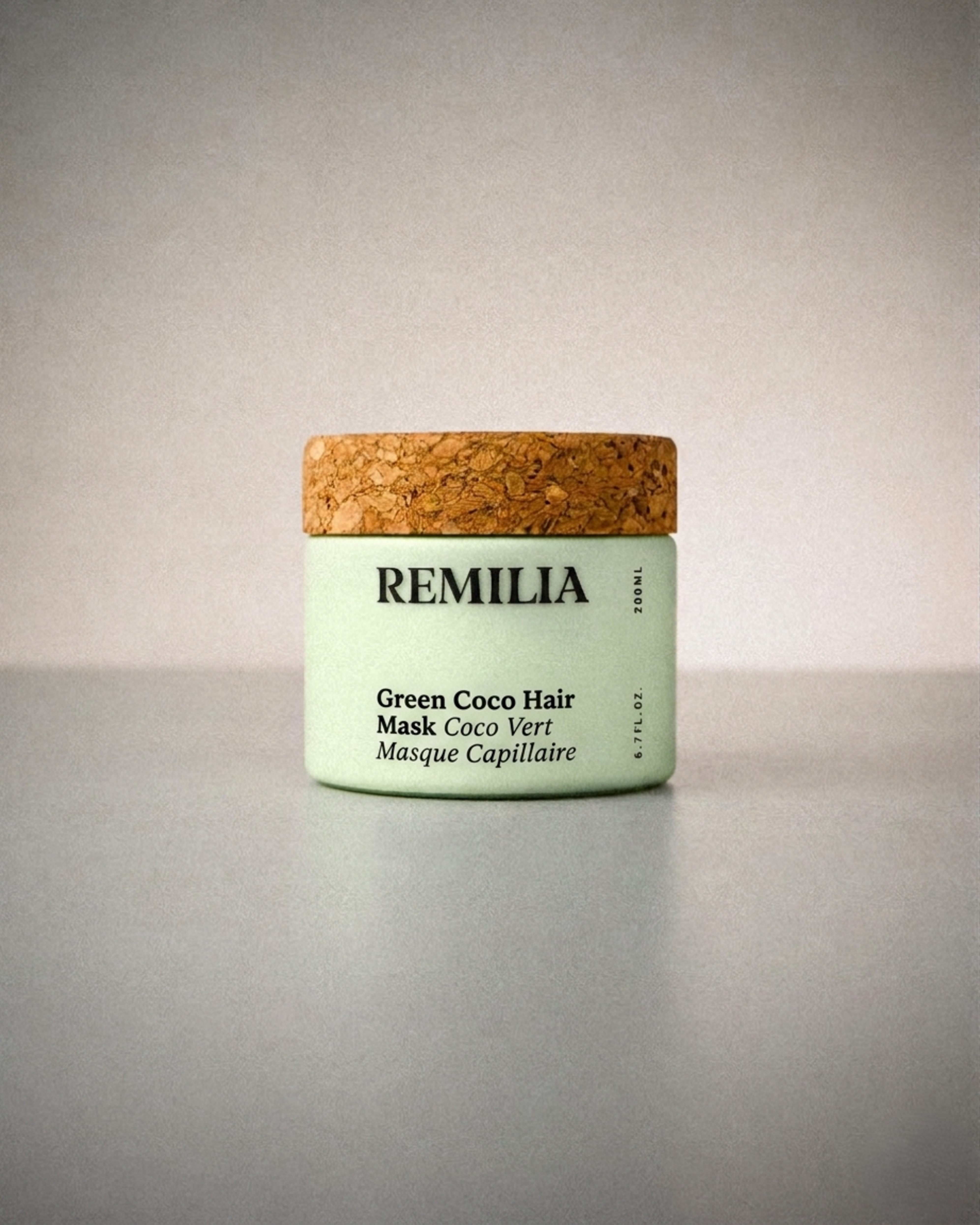
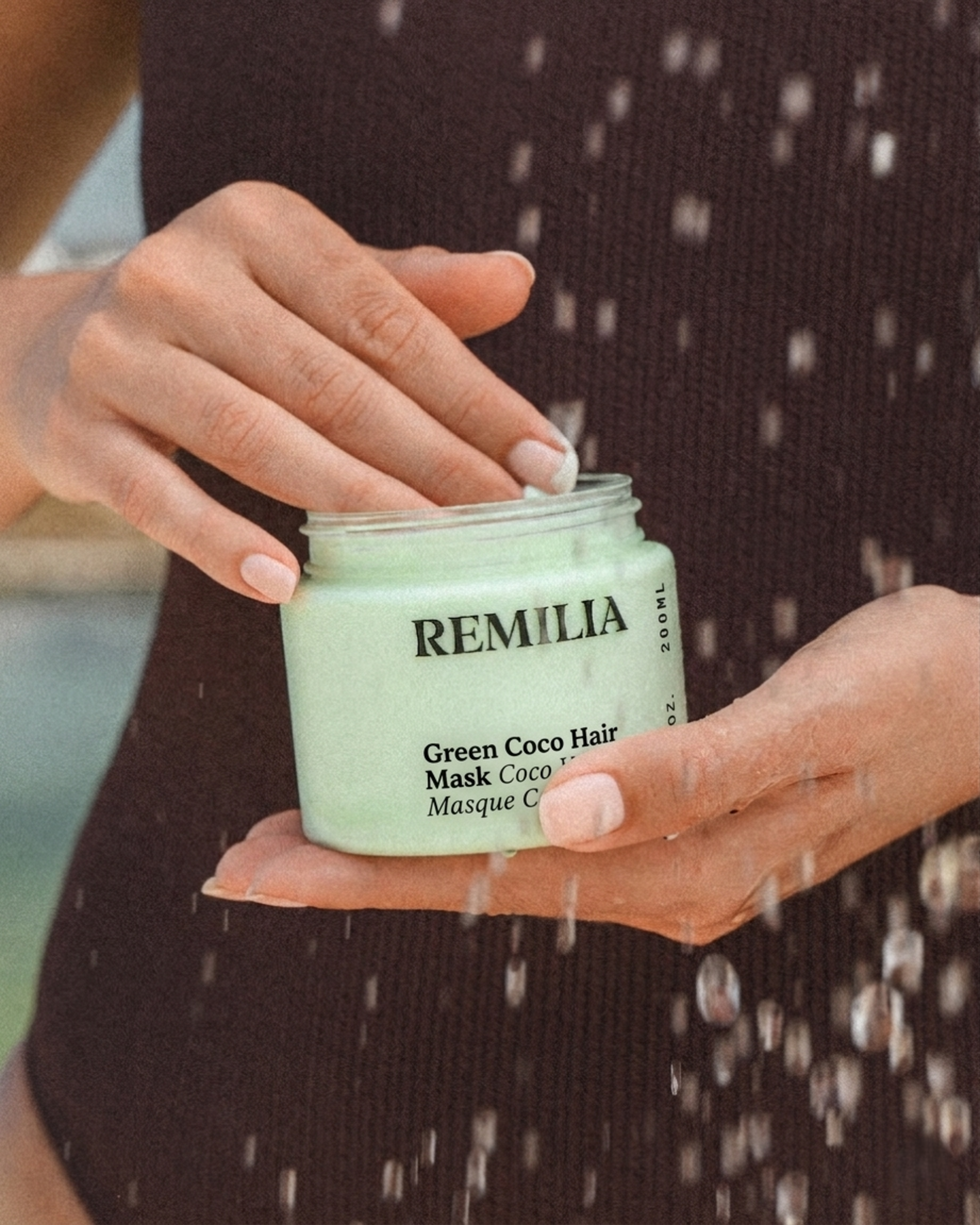
- For deeper repair, Remilia’s Green Coco Hair Mask can be used weekly alongside the leave-in conditioner.
Rice water is the starchy liquid left after soaking or boiling rice, and it contains inositol, amino acids, B and E vitamins, and minerals. Inositol is the most studied compound in rice water and can bind to the hair shaft and stay there after rinsing, reducing surface friction and breakage. Rice water does not speed up the rate hair grows from the follicle, but by reducing breakage it can help you retain length over time. Overuse can cause protein overload, which leaves hair feeling stiff, dry, and brittle, so frequency matters more than quantity. The Rice & Shine Leave-In Conditioner offers a standardized way to get rice-derived proteins onto hair without preparing a DIY rinse.
Rice water can improve how your hair looks, feels, and holds together, but it does not stimulate new hair growth from the follicle. The honest version of the claim is that rice water reduces breakage and surface friction, which helps hair retain length and look thicker, rather than causing strands to grow faster. This article explains what rice water actually contains, how it works on the hair shaft, the real risk of protein overload, and how a rice-based leave-in compares to the DIY approach.

What Rice Water Actually Is
Rice water is the cloudy, starchy water produced when you soak uncooked rice or save the liquid from boiling it. The practice is not new. It traces back centuries in East Asia, most famously to the women of Huang Luo in China and to the Heian period in Japan, where long hair was a cultural ideal.
The reason it keeps resurfacing is its nutrient profile. Rice water carries inositol, amino acids that act as the building blocks of protein, vitamins B and E, antioxidants such as ferulic acid, and trace minerals. According to the Cleveland Clinic, rice also contains inositol, an antioxidant that has been promoted as a hair growth agent, alongside vitamins and minerals that may protect hair from everyday stress. Fermented rice water, made by letting the liquid sit for a day or two before use, has a higher inositol concentration and a slightly lower pH.
How Rice Water Works on Hair
The active mechanism is mostly about the hair shaft, not the follicle. Inositol is one of the few compounds that can penetrate the strand and remain bound to it even after you rinse. Inositol is a carbohydrate that can stick to the hair shaft and make strands feel smoother and stronger. That residual coating is what reduces friction, so hair tangles less, snaps less during brushing, and reflects more light.
The proteins and amino acids play a supporting role. They are small enough to fill in weakened, porous areas inside damaged strands, which is why bleached, heat-styled, and chemically processed hair tends to respond best.
Here is the realistic timeline. Many people notice smoother, shinier hair within one or two uses. Length-retention benefits, which come from less breakage rather than faster growth, usually take four to six weeks of consistent use to become visible.

What Rice Water Cannot Do, and the Protein Overload Risk
Rice water does not change your genetic growth rate, reverse thinning, or replace a clinically proven hair loss treatment. The dramatic before-and-after videos online almost always show healthier-looking, less-broken hair, not new strands emerging from the scalp. If you are dealing with genuine hair loss, rice water is a cosmetic helper, not a medical solution.
The bigger practical risk is protein overload. Because rice water is protein-rich, using it too often can leave too much protein on the strand, especially on low-porosity or naturally healthy hair where the cuticle is already tight. The result is straw-like, stiff, dry, and fragile hair, which is the opposite of what people want. The fix is simple: use rice water sparingly, watch for stiffness, and lean on moisture-based conditioning if your hair starts to feel rough. High-porosity and damaged hair can tolerate it more often than low-porosity hair.
How a Rice-Based Formula Fits
DIY rice water is cheap but inconsistent. Concentration varies with how long you soak or ferment it, it has no real shelf life, and it offers no heat protection or controlled dosing. A formulated leave-in solves the consistency problem and adds functions a kitchen rinse cannot.
The Rice & Shine Leave-In Conditioner is built around rice-derived ingredients, including hydrolyzed rice protein and rice syrup extract, combined with hydrolyzed quinoa, hydrolyzed barley, panthenol (vitamin B5), and conditioning oils. It is a lightweight, milky spray for damp hair that detangles and smooths in the same step. It also protects hair from heat up to 450°F / 232°C and supporting color, with a company-reported claim of up to 3x better color retention after repeated washes. Treat those performance figures as brand claims rather than independent test results. For deeper repair on dry or damaged hair, the brand pairs it with the Green Coco Hair Mask as a weekly conditioning step.

Comparison: DIY Rice Water vs Rice & Shine Leave-In
| Approach | DIY Rice Water Rinse | Rice & Shine Leave-In Conditioner |
| Format | Homemade soak or boil liquid | Lightweight leave-in spray for damp hair |
| Key rice ingredient | Whole rice water (variable inositol) | Hydrolyzed rice protein + rice syrup extract |
| Added benefits | None beyond rice itself | Heat protection up to 450°F, color support, detangling |
| Consistency | Varies by batch and soak time | Standardized formula, every use the same |
| Protein overload risk | Higher (easy to overdo) | Lower (balanced with oils and B5) |
| Rinse needed | Usually rinsed out | No rinse, style as usual |
Practical Takeaways
If you want the rice-water effect, start slow. Use a DIY rinse no more than once a week, leave it on for a few minutes, then rinse, and stop if hair feels stiff. Expect smoother, shinier, less-tangled hair quickly and better length retention over a month or more, not a change in how fast your hair grows. If you would rather skip the prep and want heat protection and color support in the same step, a rice-based leave-in like Rice & Shine delivers the rice proteins in a controlled, balanced formula. Either way, the goal is the same: stronger, less-broken hair that holds its length.
Want a consistent way to get rice proteins onto your hair without the guesswork? See Remilia Hair's Rice & Shine Leave-In Conditioner and the Green Coco Hair Mask.
FREQUENTLY ASKED QUESTIONS
DOES RICE & SHINE LEAVE-IN CONDITIONER ACTUALLY CONTAIN RICE WATER? +
It contains rice-derived ingredients rather than plain rice water, specifically hydrolyzed rice protein and rice syrup extract, which deliver the same protein and conditioning benefits in a standardized form. Unlike a homemade rinse, the concentration is consistent in every bottle, and the formula adds heat protection and detangling that DIY rice water cannot provide.
CAN RICE WATER OR A RICE-BASED LEAVE-IN MAKE MY HAIR GROW FASTER? +
No. Neither rice water nor Rice & Shine speeds up the rate hair grows from the follicle. What they do is reduce breakage and surface friction so hair holds its length and looks fuller over time. Improvements in length come from retaining the hair you have, not from faster growth.
HOW OFTEN SHOULD I USE RICE & SHINE IF RICE PROTEIN CAN CAUSE OVERLOAD? +
Remilia says Rice & Shine is gentle and lightweight enough for daily use because the protein is balanced with conditioning oils and panthenol. Protein overload is more of a risk with concentrated DIY rinses used too frequently. If your hair ever feels stiff or dry, scale back and focus on a moisturizing step.
IS RICE & SHINE SAFE FOR COLOR-TREATED HAIR? +
Yes. Remilia states the formula is color-safe and reports it can support up to 3x better color retention after repeated washes, a company-reported figure. The rice and quinoa proteins help smooth the cuticle, which is part of why color can appear more vibrant and last longer between washes.
DO I NEED BOTH RICE & SHINE AND THE GREEN COCO HAIR MASK? +
They serve different roles. Rice & Shine is a daily leave-in for detangling, heat protection, and lightweight conditioning, while the Green Coco Hair Mask is a weekly deep-conditioning treatment for dry or damaged hair. Damaged, color-treated, or heat-styled hair benefits most from using the mask weekly and the leave-in routinely.
DOES RICE & SHINE REPLACE A HEAT PROTECTANT? +
It functions as one. Remilia positions Rice & Shine to protect hair from heat up to 450°F / 232°C, so applying it to damp hair before blow-drying or hot tools covers thermal protection and conditioning in one step. A plain DIY rice water rinse offers no heat protection on its own.
WILL A RICE-BASED LEAVE-IN WEIGH DOWN FINE HAIR? +
Rice & Shine is formulated as a lightweight, milky spray applied mainly through mid-lengths and ends, which keeps it from feeling heavy when used in small amounts. Fine hair should start with a light mist and avoid the roots. If hair feels coated, reduce the amount rather than the frequency.