How to Use Rice Water for Hair Growth and Repair

Rice water has been all over social media for years, and if you've watched enough videos of people rinsing their hair with cloudy white liquid and getting noticeably smoother results, you've probably wondered whether it actually works.
The short answer is: yes, within reason. It won't reverse hair loss or undo years of damage overnight, but used correctly, it can improve how your hair looks and feels.
Here's a straightforward guide to what rice water does, how to make it at home, and why the ingredient science points to a more effective alternative.
What's Actually in Rice Water?
Rice water is the starchy liquid left behind after soaking or boiling rice.
The ingredients that matter for hair are:
- Starch: Temporarily coats the hair shaft, adding slip and body.
- Amino Acids: The building blocks of protein that help reinforce the hair's structure.
- Inositol: A carbohydrate that can penetrate damaged hair and continue working after rinsing, helping reduce friction and improve elasticity.
Most ingredients wash away immediately. Inositol is one of the few that continues working after you rinse.

What It Can and Can't Do
Rice water has solid evidence behind its detangling, smoothing, and friction-reducing benefits.
However, the hair growth claims are a different story.
- Can help: Smoothness, slip, detangling, shine, and reducing friction-related damage.
- Cannot reliably do: Regrow hair, reverse hair loss, or permanently repair severe damage.
Amino acids, B vitamins, and inositol support the smoothing and detangling effects people report, but there's currently no clinical evidence that rice water regrows hair.
Three Ways to Make Rice Water at Home
Quick Rinse (5 Minutes)
- Rinse ½ cup of uncooked white rice
- Add 2–3 cups of filtered water
- Swirl until the water becomes cloudy
- Strain and use immediately
This is the lightest option and a good place to start.
Overnight Soak (8–12 Hours)
- Use the same rice-to-water ratio
- Leave in the refrigerator for 8–12 hours
- Strain before use
This produces a slightly more concentrated rinse with improved slip and shine.
Short Ferment (24–48 Hours)
- Prepare rice water as normal
- Strain the liquid
- Leave at room temperature for 24–48 hours
- Use once it develops a mild sour smell
Fermented rice water has a lower pH, which may help smooth the cuticle and reduce frizz. If it develops a strong rotten smell, discard it and start again.

Why Homemade Rice Water Has Limits
Making rice water at home is simple and inexpensive, but it has limitations.
Rice water contains amino acids and trace proteins in inconsistent amounts that vary depending on:
- The type of rice used
- How long it was soaked
- Your water quality
- Whether it was fermented
There's no standardized concentration of active compounds, no guaranteed shelf stability, and no way to know how much of anything is actually reaching your hair.
The bigger issue is molecular size. Whole proteins and large peptide fragments are often too large to interact meaningfully with the hair fiber. They sit on the surface temporarily, which explains the short-term smoothing effect, but they don't deliver the kind of structural support that can meaningfully improve hair condition over time.
This is where hydrolyzed rice protein becomes a very different proposition.
What Hydrolyzed Rice Protein Actually Does
Rice protein starts, unsurprisingly, with rice. Through a process called hydrolysis, enzymes or acids break down large protein chains into smaller fragments called peptides and amino acids.
The result is hydrolyzed rice protein: a form small enough to interact meaningfully with the hair fiber surface.
Unlike rice water, hydrolyzed rice protein:
- Adsorbs directly to the cuticle
- Helps reinforce the hair surface
- Reduces friction that contributes to breakage
- Provides standardized, clinically tested performance
Clinical testing on RICE TEIN NPNF, a standardized hydrolyzed rice protein ingredient, showed a 44.1% improvement in hair volume after just five washes.
That's the key difference between DIY rice water and modern cosmetic formulation.

The Remilia Products That Use It
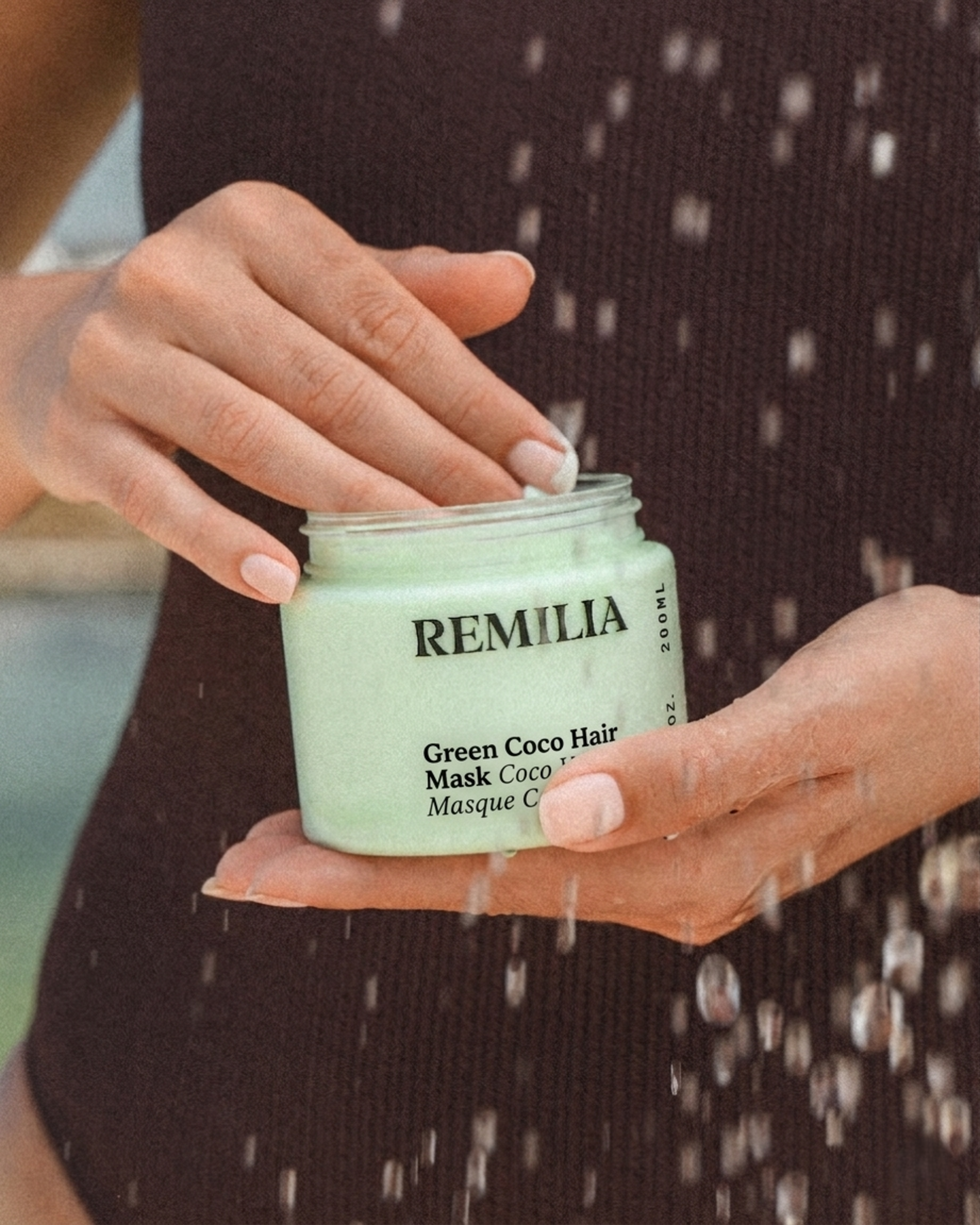
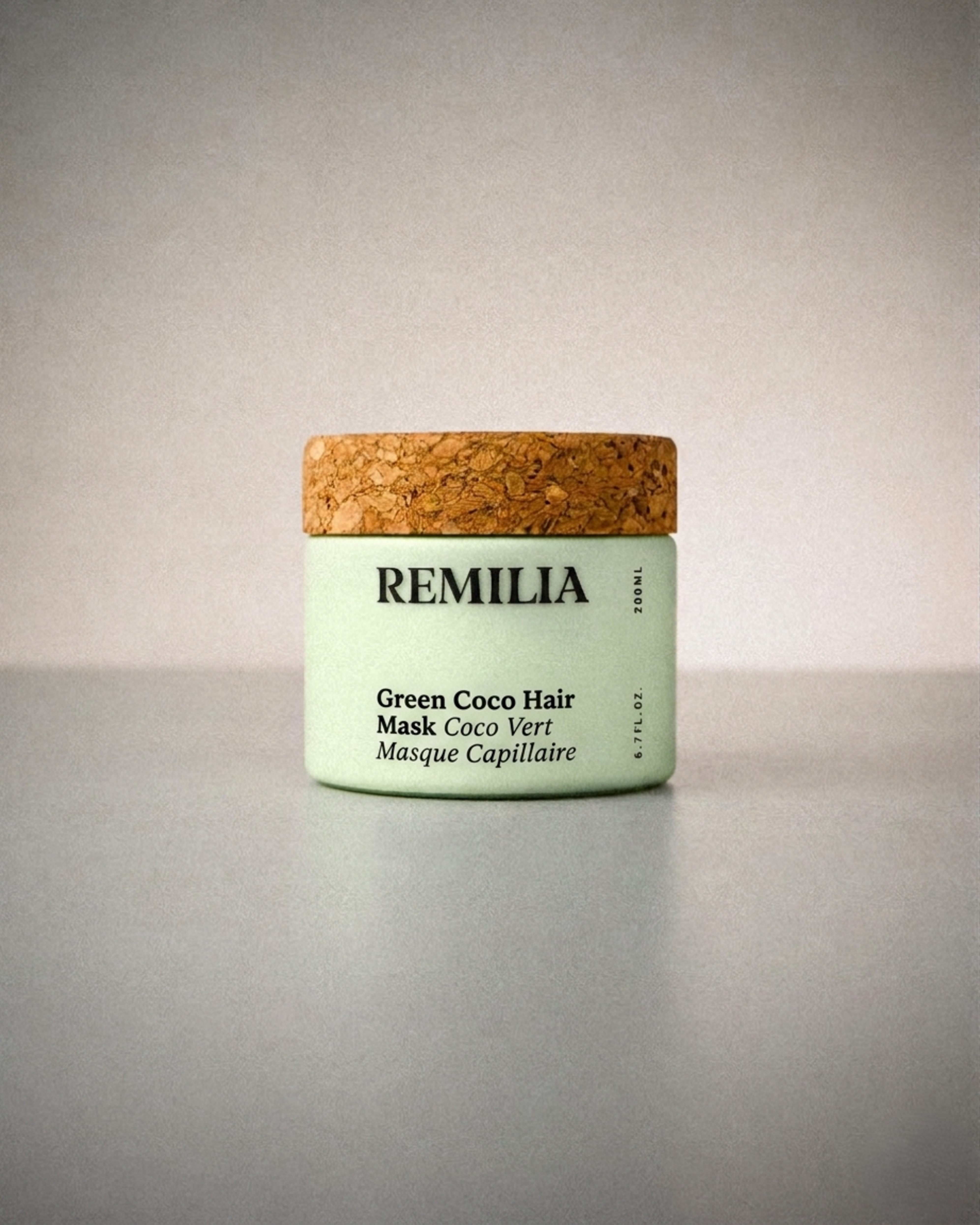
Green Coco Hair Mask
A weekly deep conditioning treatment formulated with hydrolyzed rice protein, hydrolyzed quinoa, a clinical amino acid complex, coconut oil, avocado oil, and panthenol.
- Up to 50% stronger hair
- 44.1% improvement in volume after five washes
- Suitable for all hair types
- Color-safe, vegan, and clinically tested
How to Use
Apply generously to clean, damp hair after shampooing. Focus on mid-lengths and ends and leave on for 5–10 minutes before rinsing.
Rice & Shine Leave-In Conditioner
A lightweight leave-in treatment featuring hydrolyzed rice protein, hydrolyzed barley, hydrolyzed quinoa, rice syrup extract, and a dual-action heat protection system.
- Up to 21.7% stronger hair
- 16.4% improvement in elasticity
- Heat protection up to 450°F
- Up to 3x better color retention
How to Use
Spray onto damp hair before heat styling, or lightly mist onto dry hair before using hot tools. No rinse required.
Ready to Make the Switch?
If you want the benefits of rice protein without the inconsistency of DIY rice water, the Green Coco Hair Mask and Rice & Shine Leave-In Conditioner are a great place to start.
One handles weekly repair. The other protects and strengthens every time you style. Used together, they create a complete protein-support routine for stronger, healthier-looking hair.
FREQUENTLY ASKED QUESTIONS
WHAT IS RICE WATER AND DOES IT ACTUALLY WORK? +
Rice water is the starchy liquid left after soaking or rinsing rice. It can help improve smoothness, detangling, and manageability, but results vary because the active ingredient concentration is never standardized.
DOES RICE WATER HELP HAIR GROW? +
There is currently no clinical evidence that rice water promotes hair growth or reverses hair loss. Most reported benefits relate to smoother, more manageable hair rather than new growth.
WHY IS HYDROLYZED RICE PROTEIN MORE EFFECTIVE THAN HOMEMADE RICE WATER? +
Hydrolyzed rice protein is processed into smaller peptides and amino acids that can interact more effectively with the hair surface. It's standardized, clinically tested, and provides more consistent results than homemade rice water.
WHAT HAIR TYPES CAN USE THE GREEN COCO HAIR MASK? +
The Green Coco Hair Mask is suitable for all hair types, including straight, wavy, curly, coily, fine, thick, color-treated, and chemically processed hair.
HOW OFTEN SHOULD I USE THE GREEN COCO HAIR MASK? +
Most people benefit from using it one to two times per week. For a more intensive treatment, leave it on for 20–30 minutes under a warm towel or cap.
IS THE RICE & SHINE LEAVE-IN CONDITIONER SAFE FOR DAILY USE? +
Yes. It's lightweight enough for daily use on all hair types, including fine, color-treated, and chemically processed hair.
CAN I USE THE GREEN COCO HAIR MASK AND RICE & SHINE LEAVE-IN TOGETHER? +
Yes. Use the mask after shampooing, rinse thoroughly, then apply Rice & Shine to damp hair before styling. The two products complement each other as part of a complete routine.
DOES RICE & SHINE HELP WITH COLOR-TREATED HAIR? +
Yes. Clinical testing has shown up to 3x better color retention compared with non-silicone formulas, helping maintain vibrancy through repeated washes.