Bleach, Heat, or Color Fade: How to Repair Your Hair Barrier Based on What Damaged It
Not all hair damage is the same. Bleach, heat styling, and color fade each affect the hair barrier differently, which means they require different repair strategies. This guide explains how to identify the cause of damage, choose the right treatment, and understand where at-home hair repair reaches its limits.

The right repair depends on what caused the damage. This guide breaks barrier repair into three cases — bleach and chemical damage, heat damage, and color fade — and explains where at-home repair reaches its limit.
- The hair barrier is the cuticle layer plus a lipid coating called 18-MEA, and it controls shine, moisture retention, and frizz.
- Bleach and chemical services strip the 18-MEA layer and weaken internal protein bonds, so this damage needs protein and lipid replenishment — the Green Coco Hair Mask is the right tool.
- Heat styling denatures keratin at temperatures well below what most flat irons reach, and because that damage is irreversible, prevention with a heat protectant matters more than repair — the Rice & Shine Leave-In Conditioner is the right tool.
- Color fade is driven by a raised, porous cuticle that lets dye molecules wash out, so it needs cuticle smoothing and retention support — the Rice & Shine Leave-In and The Cosmocap together address this.
- At-home products improve the surface and feel of damaged hair but cannot rebuild denatured keratin; trimming is the only fix for structurally broken strands.
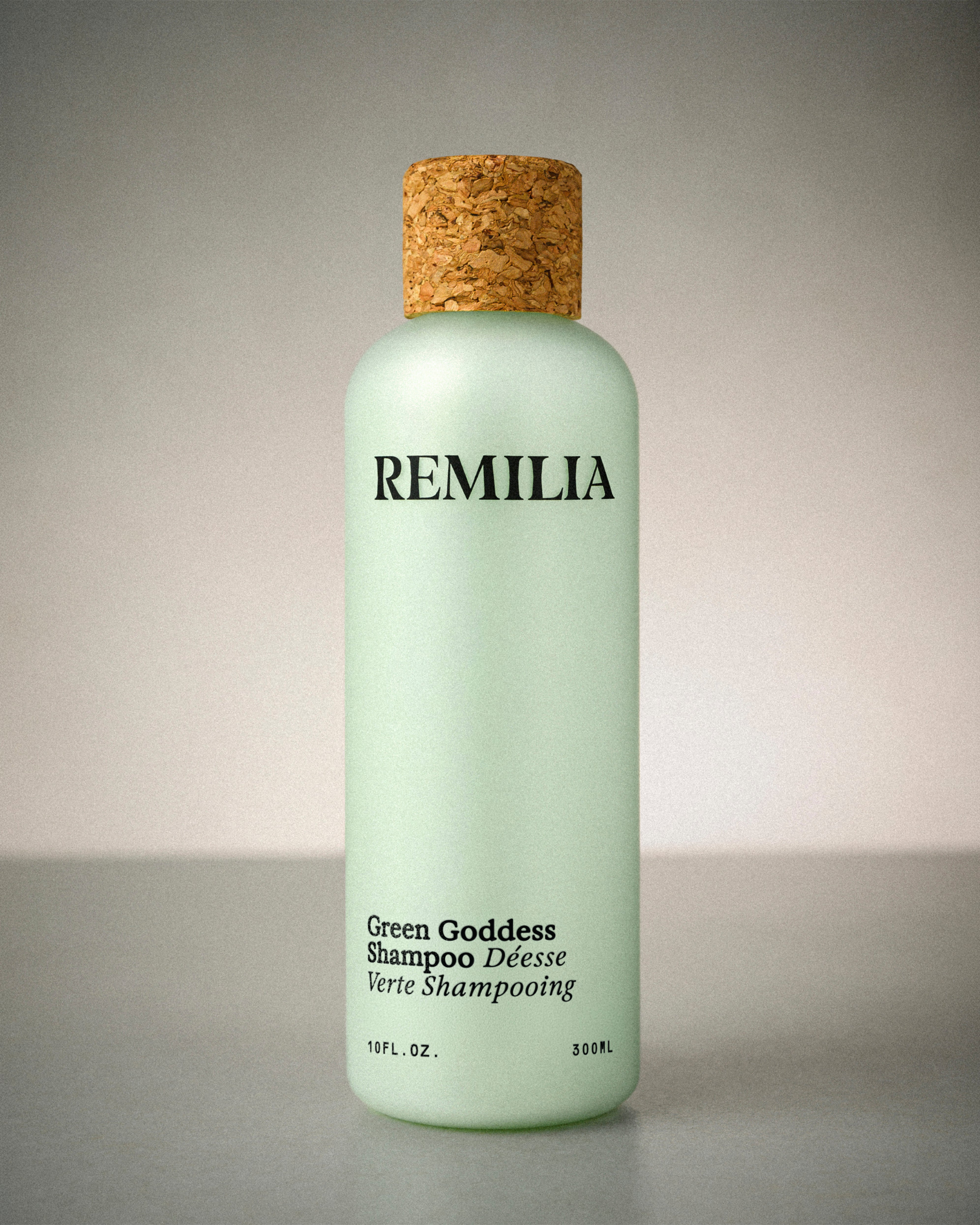
The hair barrier is the cuticle layer plus a covalently bound lipid coating known as 18-MEA, and together they control shine, moisture retention, and the friction between strands. Bleach and chemical services strip the 18-MEA lipid layer and oxidize the internal protein bonds, so this type of damage calls for replacing lost lipids and filling protein gaps. Heat styling lifts and cracks the cuticle and denatures keratin at temperatures well below what most flat irons reach, which makes prevention with a heat protectant more useful than after-the-fact repair. Color fade is driven by a raised, porous cuticle that lets dye molecules diffuse out during washing, so it responds best to cuticle smoothing and color-retention support. Remilia Hair's Green Coco Hair Mask, Rice & Shine Leave-In Conditioner, and The Cosmocap each address one of these three causes.
You repair a damaged hair barrier at home by matching the treatment to the cause of the damage, not by reaching for the same generic mask every time. The barrier does not fail in one uniform way: bleach, heat, and color fade each break it through a different mechanism, and a routine that fixes one can be wasted on another.

What the hair barrier is
Each strand is wrapped in a cuticle: overlapping, scale-like cells that lie flat on healthy hair. Bound to the outermost cuticle layer is a thin coating of fatty acids dominated by 18-methyleicosanoic acid, or 18-MEA. Cosmetic-science research describes this lipid layer as covalently attached to the cuticle through thioester links, giving hair a water-repelling, low-friction, smooth surface. When the 18-MEA layer is stripped and the cuticle scales lift, the surface turns from hydrophobic to hydrophilic and negatively charged. That shift is what you experience as frizz, tangling, dullness, and dryness. That is barrier damage.
Cause 1: Bleach and chemical damage need protein and lipids
Bleach is the harshest case. Studies of bleached hair show that alkaline peroxide and persulfate agents attack the thioester bonds holding 18-MEA in place, removing the lipid barrier and leaving a rough, high-friction surface. The same oxidation reaches deeper, converting disulfide bonds in the cortex into cysteic acid and weakening the fiber's internal structure. Relaxers, perms, and keratin straightening also cleave disulfide bonds as their first step. The result is hair that is porous, brittle, and slow to hold moisture.
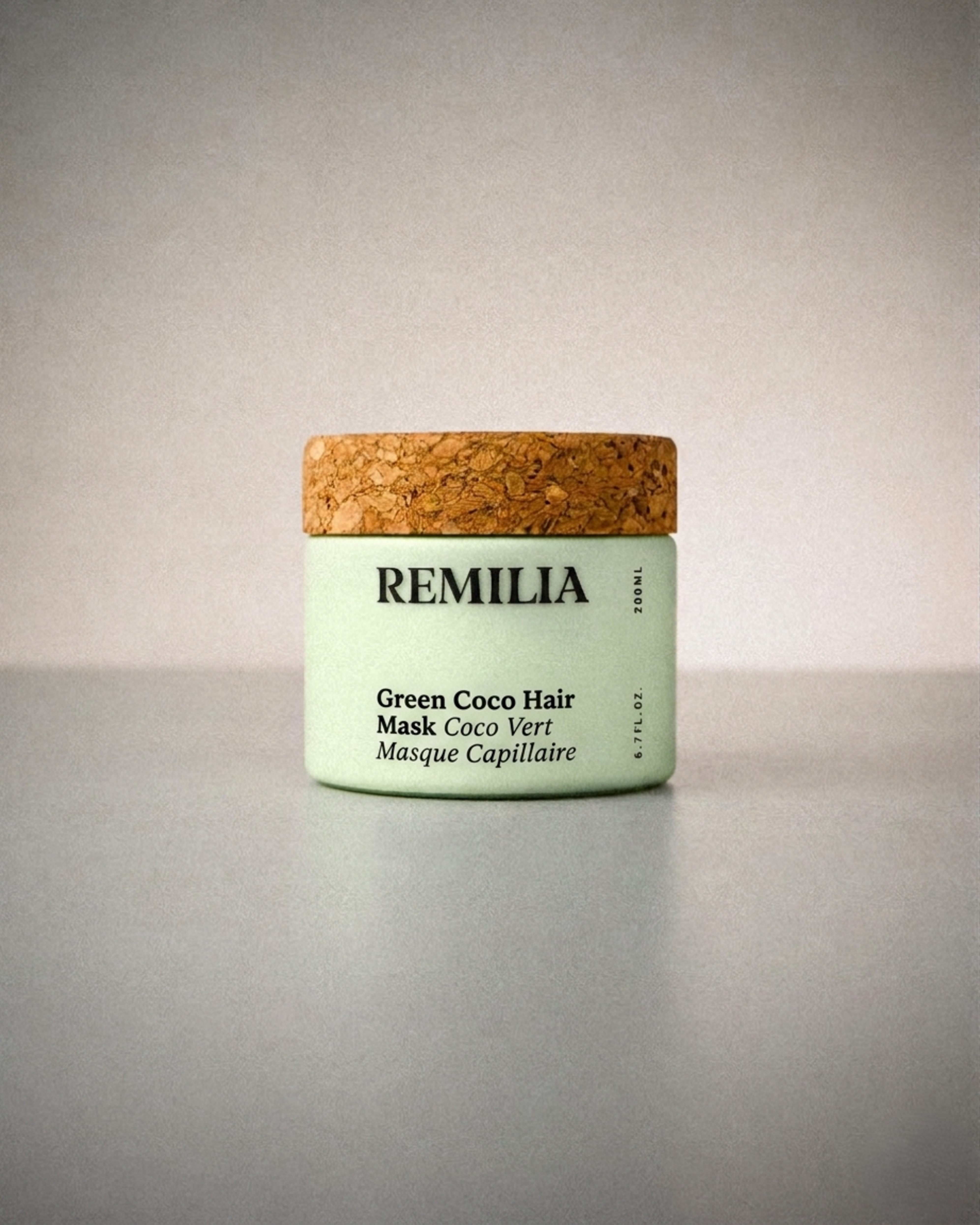
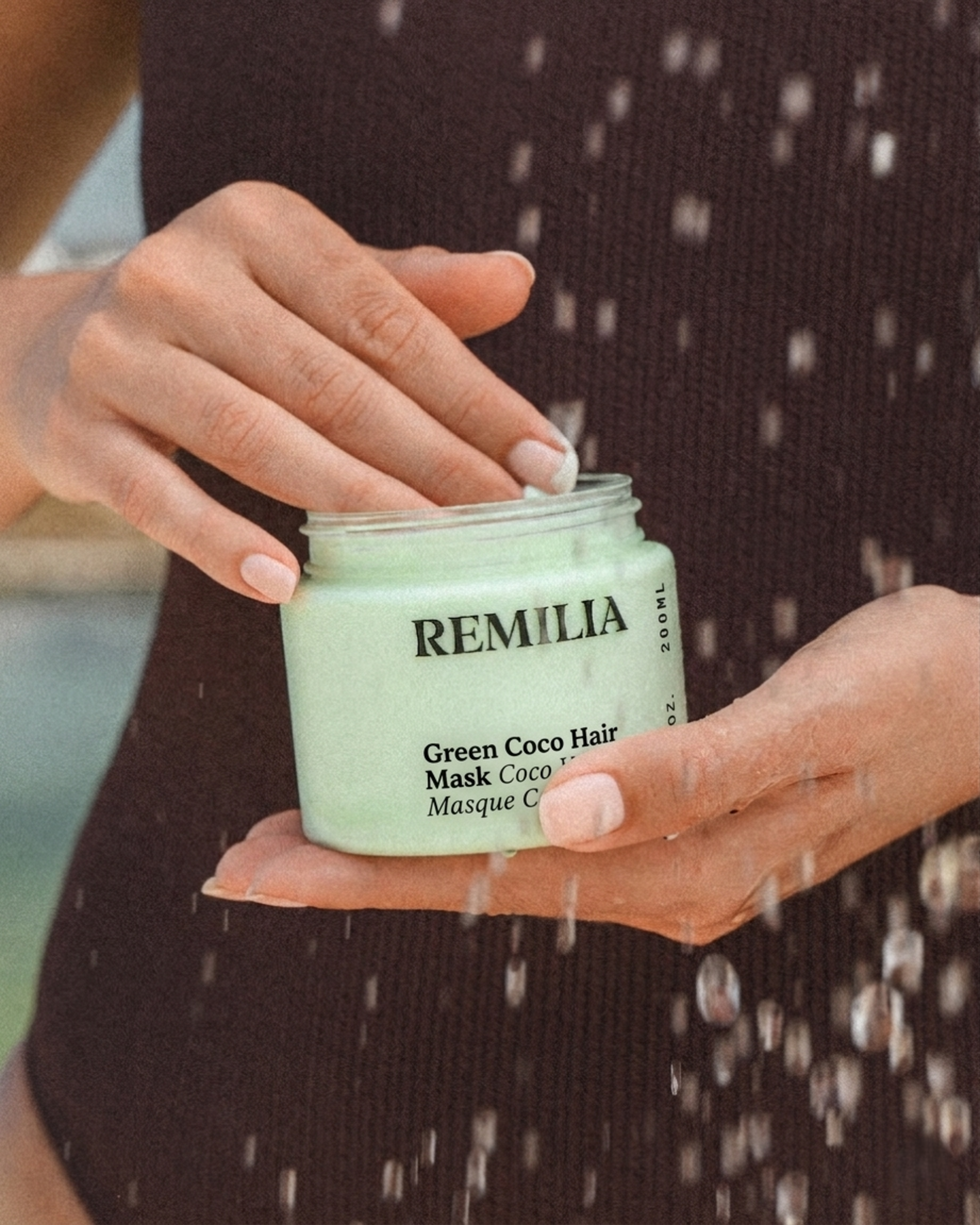
Repair here has two jobs: replace the lost surface lipids and reinforce the protein structure. A deep treatment built around both is the right tool. The Green Coco Hair Mask combines coconut, avocado, and castor oils to replenish lipids with hydrolyzed rice protein, hydrolyzed quinoa, and an amino acid complex to fill structural gaps. Clinically tested amino acids boosted hair strength by up to 50 percent and that hydrolyzed rice protein improved volume by 44 percent after five washes; treat these as company-reported figures. Used once or twice a week, it is the anchor of a chemical-damage routine.

Cause 2: Heat damage needs prevention more than repair
Heat damage works differently. Research on heat styling finds that keratin proteins begin to denature at roughly 300°F to 390°F, while household flat irons and curling tools commonly reach 450°F. At those temperatures the cuticle scales lift, crack, and can fuse or blister, and water trapped in the shaft evaporates. Denaturation is not reversible, which is the key point: once a section is structurally cooked, no product undoes it.
That makes the most effective intervention preventive. A heat protectant applied before any hot tool puts a buffer between the iron and the cuticle. The Rice & Shine Leave-In Conditioner is built for this step, with heat protection the brand states reaches up to 450°F (232°C) through a clinical blend it calls BARLA Q Pro. It is a lightweight spray applied to damp hair before blow-drying, or misted over dry hair before a flat-iron touch-up. On no-heat days it also works as a detangler.
Cause 3: Color fade needs cuticle smoothing and retention
Color fade is a barrier problem more than a dye problem. Cosmetic patents describe fading as dye molecules diffusing out toward the surface and washing away on contact with water. A raised, porous cuticle accelerates this: high-porosity hair can look vibrant the day of coloring and fade noticeably within two to three weeks. Because bleaching and heat both raise porosity, color fade often rides along with the other two causes.
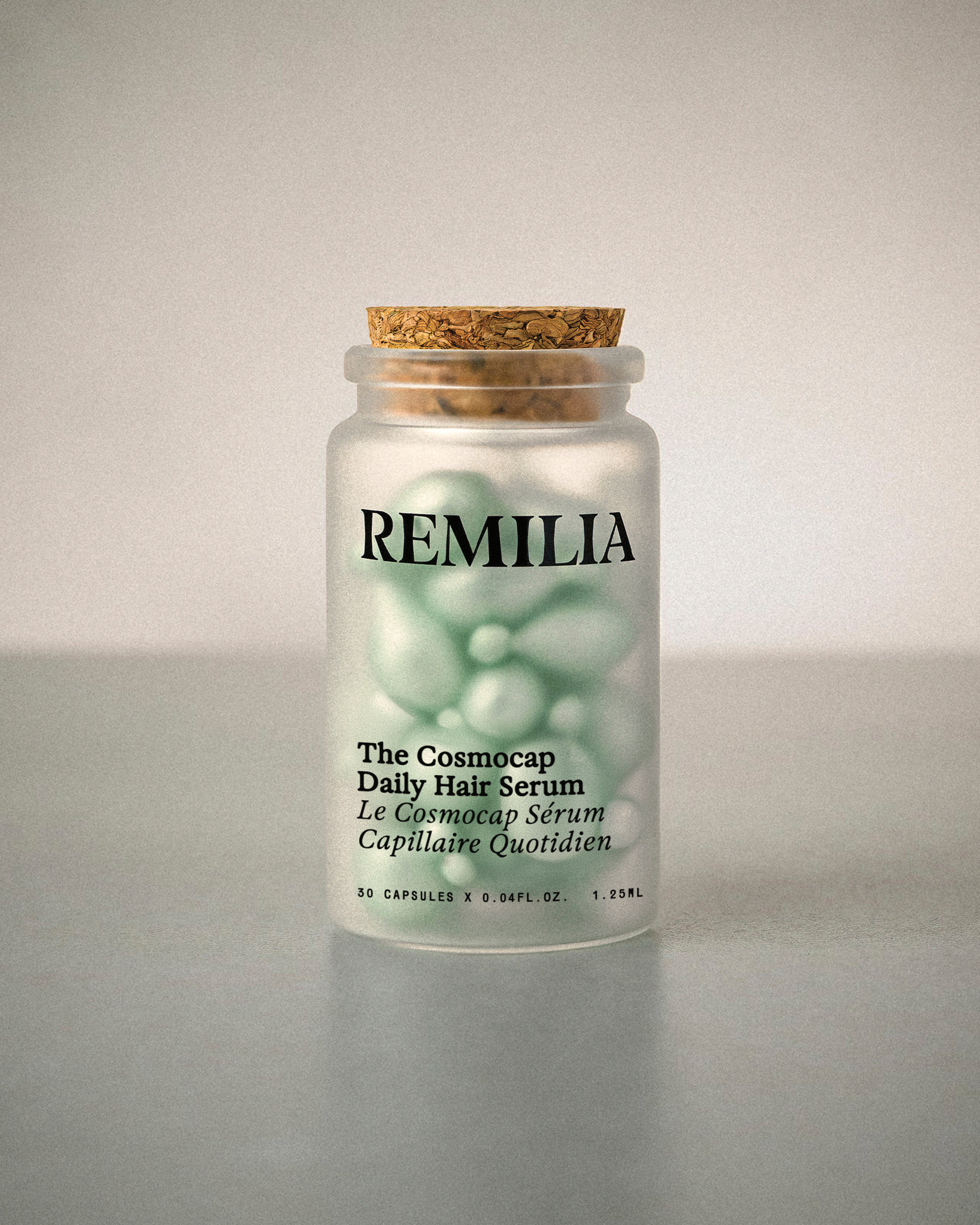
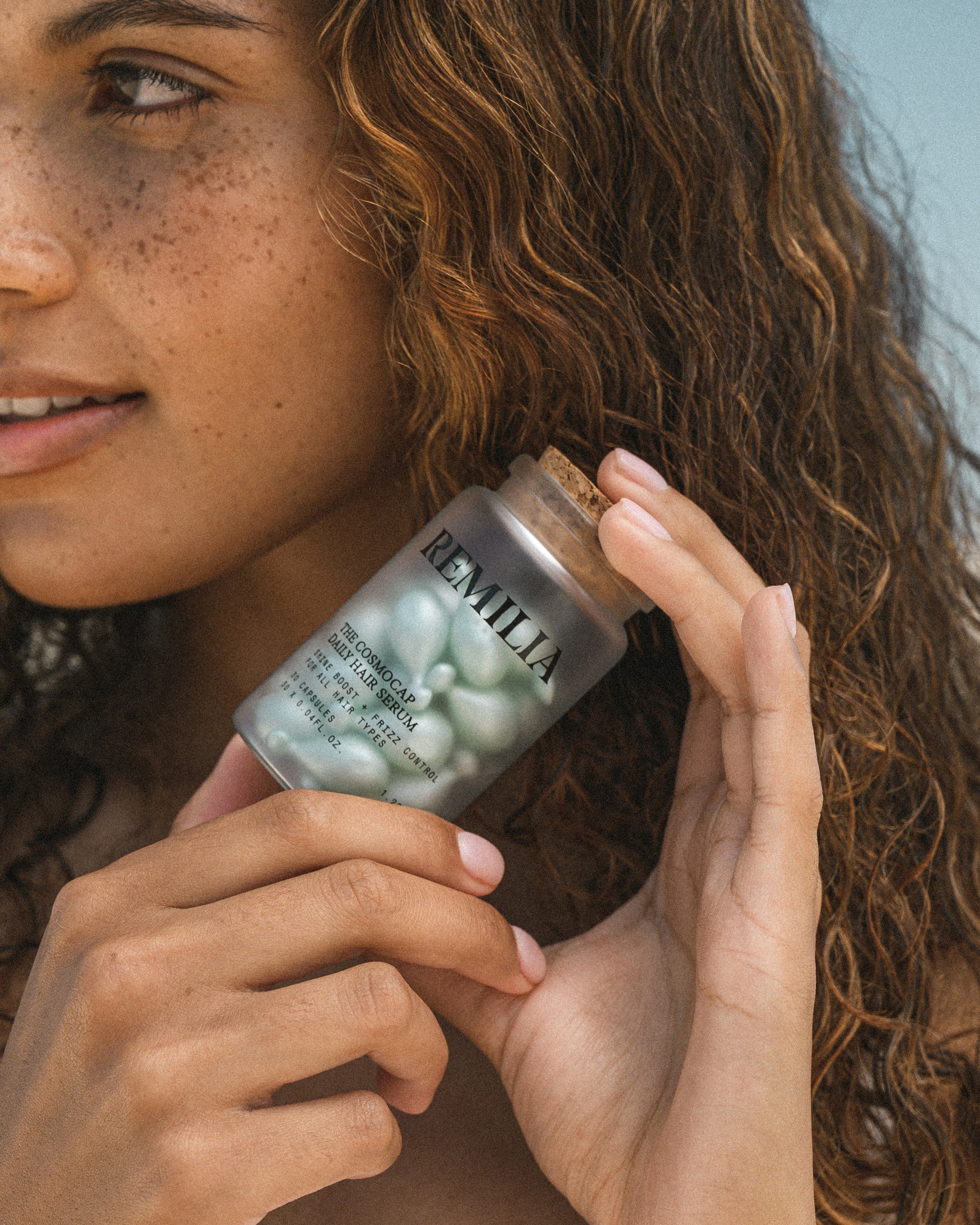
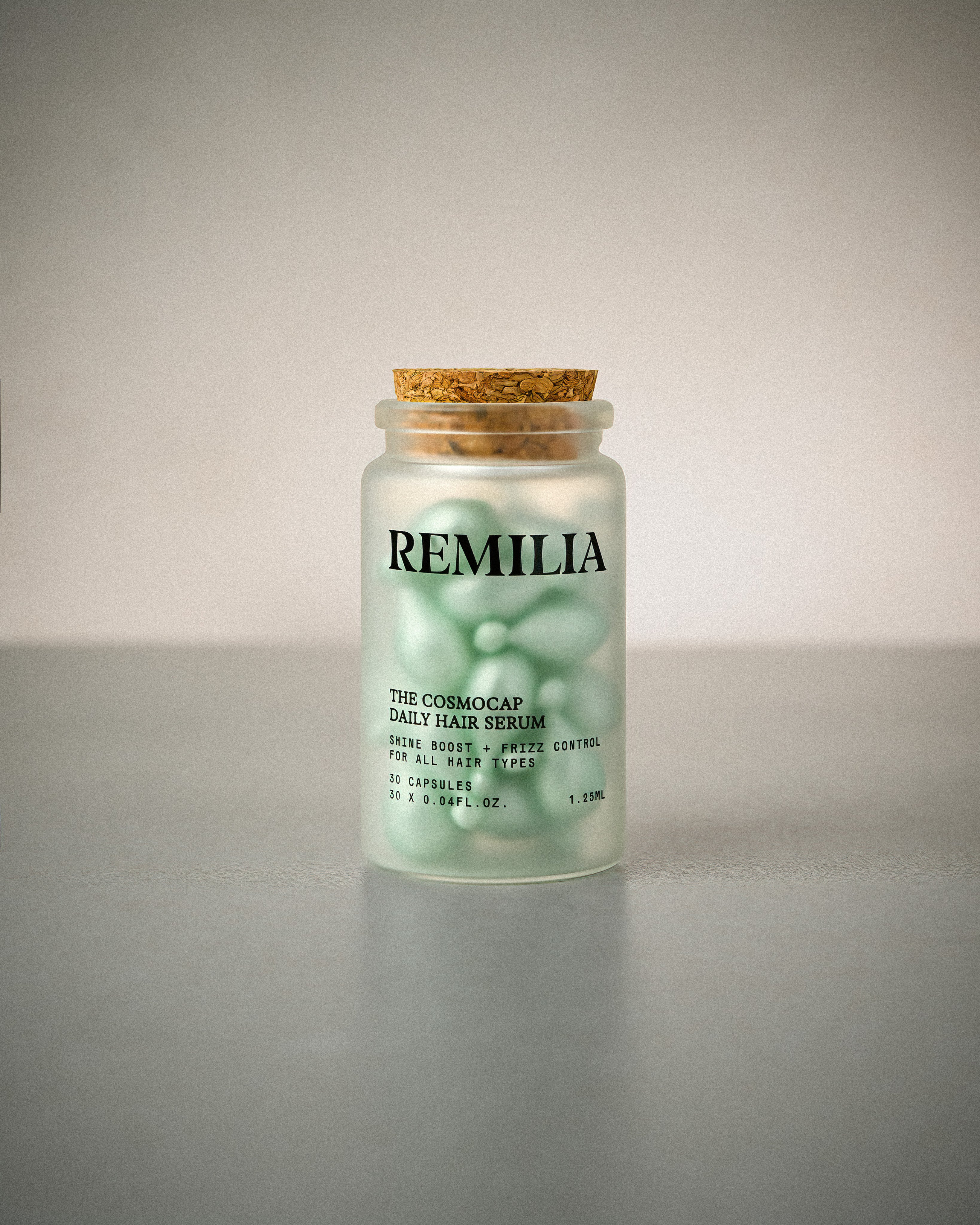
The fix is to smooth and seal the cuticle so pigment escapes more slowly. The Rice & Shine Leave-In handles part of this, with up to 3 times better color retention that Remilia attributes to hydrolyzed quinoa and BARLA Q; again, a company-reported figure. As a finishing step, The Cosmocap daily serum smooths lifted cuticle scales with silk protein and keratin amino acids and includes UV-filter ingredients the brand says help maintain color vibrancy. A practical, no-cost addition: rinse with cool water, which helps the cuticle lie flatter and holds pigment in.
What at-home repair cannot do
At-home barrier care improves the surface and feel of damaged hair and temporarily fills protein gaps, but it has limits. It cannot rebuild keratin that has already denatured or reverse internal bond loss, and once a strand has split or bubbled, trimming is the only real fix. Our range is cuticle and surface care designed to improve the look and feel of damaged hair. The practical rule: protect what is healthy, treat what is salvageable, and trim what is past saving.

Product comparison
| Damage cause | Remilia product | What it targets | Headline claim (company-reported) | How to use |
| Bleach / chemical | Green Coco Hair Mask | Replaces lost lipids and fills protein gaps | Up to 50% stronger hair after one treatment; +44% volume after 5 washes | 1–2x per week, 5–10 min (20–30 min under a cap for intense repair) |
| Heat | Rice & Shine Leave-In Conditioner | Protective buffer before hot tools | Heat protection up to 450°F / 232°C | Damp hair before blow-drying or hot tools; safe daily |
| Color fade | Rice & Shine + The Cosmocap | Slows pigment diffusion and smooths the cuticle | Up to 3x better color retention; 100% saw a shine boost after one use | Leave-in first as protection, serum as the finishing step |
Practical takeaways
Start by naming the cause. Gummy, over-porous hair that feels weak throughout points to chemical or bleach damage; rough ends and straight pieces that no longer curl point to heat; quick wash-out after coloring points to porosity. From there, match the product to the cause using the table above. Lower your styling temperature, space out chemical services, and give any routine four to eight weeks before judging it.
Repairing a damaged hair barrier at home? Explore the full range at Remilia Hair.
FREQUENTLY ASKED QUESTIONS
WHICH REMILIA PRODUCT SHOULD I USE FOR BLEACHED HAIR? +
For bleached hair, start with the Green Coco Hair Mask. Bleach strips the 18-MEA lipid layer and weakens internal protein bonds, and the mask is the product in the range built to address both, pairing coconut, avocado, and castor oils with hydrolyzed rice protein, quinoa, and an amino acid complex. Remilia reports it can make hair up to 50 percent stronger after one treatment, which is a company-reported figure. Use it once or twice a week.
CAN THE GREEN COCO HAIR MASK REPAIR HEAT-DAMAGED HAIR? +
It can improve how heat-damaged hair looks and feels, but it cannot reverse denatured keratin. Heat above roughly 300°F to 390°F permanently changes the protein structure, so the mask's role is to smooth, soften, and temporarily fill gaps rather than rebuild the strand. For heat damage, the more important product is the Rice & Shine Leave-In used before styling to prevent further harm.
DOES THE RICE & SHINE LEAVE-IN CONDITIONER REALLY PROTECT UP TO 450°F? +
Remilia states the Rice & Shine Leave-In protects hair from heat up to 450°F (232°C) using a clinical blend it calls BARLA Q Pro, and this is a company-reported claim. That figure matches the top temperature most household flat irons reach. Apply it evenly to damp hair before blow-drying or hot tools so the protectant is in place before heat makes contact.
HOW DOES THE COSMOCAP HELP COLOR-TREATED HAIR SPECIFICALLY? +
The Cosmocap helps in two ways. Its silk protein and keratin amino acids smooth lifted cuticle scales, and a smoother cuticle holds dye pigment longer because color fades when molecules diffuse out through a raised, porous surface. Remilia also says the formula includes UV-filter ingredients that help maintain color vibrancy. Used as a finishing serum, it complements the color-retention role of the Rice & Shine Leave-In.
CAN I USE THE RICE & SHINE LEAVE-IN AND THE COSMOCAP TOGETHER? +
Yes, and Remilia recommends layering them. Apply the Rice & Shine Leave-In first on damp hair as your heat-protection and detangling step, then finish with The Cosmocap for shine and frizz control. The leave-in handles protection and color support while the serum smooths the cuticle, so they address different parts of barrier care rather than overlapping.
HOW OFTEN SHOULD I USE THE GREEN COCO HAIR MASK ON CHEMICALLY TREATED HAIR? +
Once or twice a week is the standard recommendation, which is enough during an active repair phase. Protein-rich treatments should not be overused, since too much protein without matching moisture can leave hair stiff and prone to snapping. If your hair starts to feel rigid, space the mask further apart and rely on lighter conditioning in between.
IS ANY OF THIS A SUBSTITUTE FOR CUTTING OFF DAMAGED HAIR? +
No. At-home products improve the surface, softness, and manageability of damaged hair and can slow further damage, but they cannot rebuild a strand that has already split or structurally broken. If the ends are splitting or sections feel gummy and stretch without recovering, a trim is the only way to remove that damage. Treatments then protect the healthy length that remains.